
How Does Trauma-Informed Care Support Addiction Recovery?
Many people fight a hard battle with addiction every day. It is not an easy fight to win alone. Quitting drugs or alcohol can feel like an impossible mountain to climb. But why is it so hard to stop?
For many people, the answer hides in their past. Bad things may have happened to them a long time ago. These bad events leave deep, invisible scars on the mind. These scars are trauma.
To beat addiction for good, we must heal these scars first. This is where trauma-informed care can be of assistance.
Trauma-informed care supports addiction recovery by healing the deep emotional pain that causes substance use. Doctors address the past hidden injuries, rather than treating the addiction.
Let’s explore exactly how it works and why it helps.
What Is Trauma-Informed Care?
Trauma-informed care is an approach to care that understands how past hurt can affect a person’s life, behavior, health and relationships. Addiction is often a result of a history of abuse, neglect, violence, loss, discrimination, or frightening experiences.
Trauma-informed care means the people helping you understand this. They’re not judging your situation. They work to make you feel safe, respected and supported.
Trauma-informed care is not a one-size-fits-all approach. It’s an approach that informs the provision of care. Trauma-specific therapies may be used when you are ready and when a trained provider recommends them, such as:
EMDR
Cognitive processing therapy (CPT)
Prolonged exposure (PE)
Trauma-focused CBT
At Mar Y Sol Mental Health Experts, trauma-informed treatment is a central part of our approach. Our team can provide supportive services and help match you with relevant therapies to support trauma-related issues.
Why Do Trauma and Addiction Go Together?
Trauma and addiction are closely linked. When someone has bad memories, their brain is always on high alert. They might have bad dreams. They might feel angry or sad very fast. Living like this makes a person very tired.
To stop the pain, some people try drugs or alcohol. The substances make the bad feelings go away for a short time. They make the brain feel numb. But the relief ends quickly. Soon, the person needs more drugs to get through the day.
This creates a trap. The person now has two problems:
They have the deep pain of trauma
They also have an addiction
Health experts report that most people who seek help for addiction have a history of trauma. You can't fix the addiction if you don't fix the pain.
What Are the Core Principles of Trauma-Informed Care?
According to SAMHSA, trauma-informed care follows six key principles:
Safety
Trustworthiness and transparency
Peer support
Collaboration and mutuality
Empowerment, voice and choice
Cultural, historical and gender issues
How Does Trauma-Informed Care Support Addiction Recovery?
Trauma-informed care helps in many ways:
1. Creating a Safe Place
Safety is the most important part of healing. A trauma-informed team works hard to create a calm space just for you. They inform you exactly what will occur when you visit. Put differently, once you are safely aware that it is no longer a concern, your brain can relax and focus on recovering from the accident.
2. Building Real Trust
Trauma makes it hard to trust people. Your care team takes time to demonstrate honesty and friendliness. They don’t pass judgment on you. They take your interpretation on board with an open mind.
3. Giving You Choices
Addiction takes away your daily choices. Trauma-Informed Care puts that power back in your hands. You have the opportunity to become part of the rules in the process of healing. The treatment is at your own pace.
4. Offering Peer Support
Shame and isolation decrease when connection with others who have gone through similar experiences. Peer support, recovery groups and community programs can be important parts of lasting recovery.
5. Learning Coping Skills
When you stop using drugs, old pain might come back. Caring counselors teach you new ways to deal with the pain. You may be taught relaxation techniques or journaling. These new skills replace the drugs and alcohol.
Trauma-Informed Care vs. Standard Care
Both types of care can help people with addiction. Trauma-informed care also pays close attention to how past pain may affect a person.
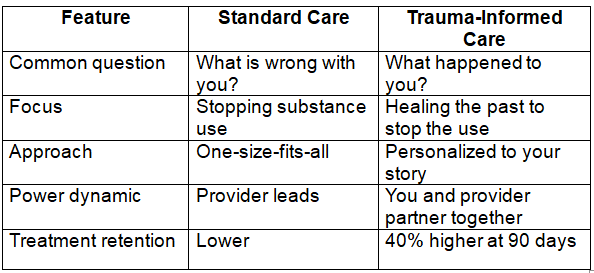
Trauma-informed care can work with other types of care. These may include medicine, therapy and support groups.
Where Can I Find Trauma-Informed Care?
If this approach sounds like the right fit, you may be wondering where to find it. At Mar Y Sol Mental Health Experts, the team provides trauma-informed treatment for people facing mental health and substance use challenges.
Our owner and CEO, Dr. Aura Ardon, started our clinic to create a calm, safe and welcoming place.
We help with alcohol problems and opioid problems. We mix medicine, mental health support and trauma therapy.
We also offer medicines like Suboxone, Sublocade and Vivitrol. These medicines help stop cravings. They help people stay in recovery. We use them with therapy and trauma support. This gives people the best chance to heal.
If you or someone you love is fighting addiction and trauma, you are not alone. We are here to help. Contact Mar Y Sol Mental Health Experts today to start your healing journey.
Related Reading: Is Outpatient Care Effective for Alcohol or Drug Use Disorder?
FAQs
How long does trauma-informed care take?
Every person is very different. Healing from the past takes time. Some people feel better in a few months, while others need a year or more. You get to move at a pace that feels safe for you.
Is medication used in trauma-informed care?
Yes, it can be. If a doctor thinks it will help calm your mind or balance your mood, they might suggest medication. It is just one helpful tool used alongside talking therapy.
Can I do trauma-informed therapy online?
Yes. Mar Y Sol Mental Health Experts offers safe and private telehealth services. You can get help from the comfort of your own home in Connecticut, New York, Florida and Nebraska.
Conclusion
Trauma-informed care helps people with addiction. It helps them feel safe, trust others and take back control. It heals the deep hurt that can lead to drug or alcohol use.
Healing is possible. With the right help, you can have hope and a better life.
Ready to take the first step? Contact Mar Y Sol Mental Health Experts today to schedule a safe, supportive telehealth or in-person visit. Let’s help you build a brighter future.
