
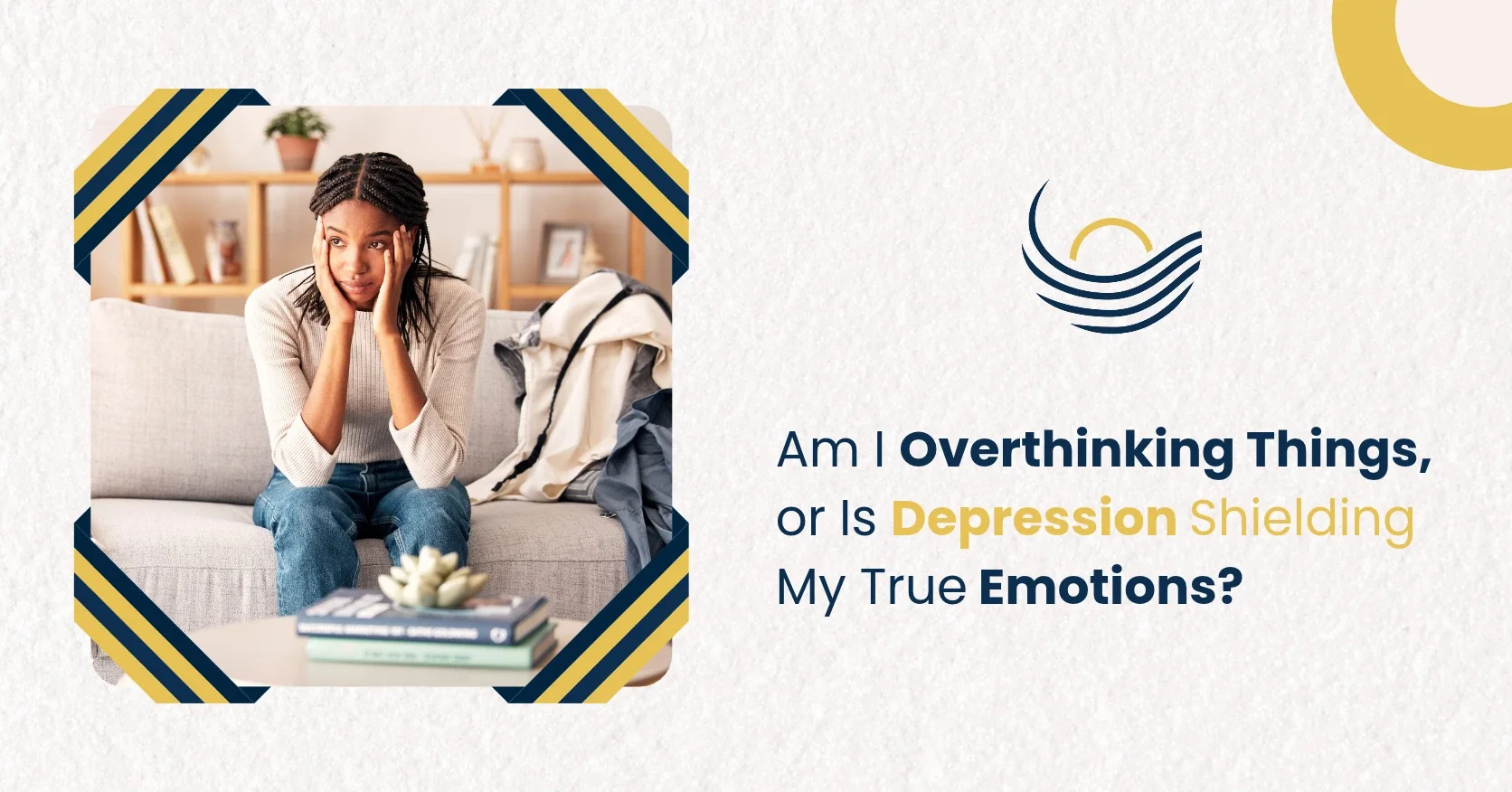
Do you lie in bed at night with a racing mind? Do you replay conversations or constantly dwell on the future? If so, you're not alone. This experience, known as overthinking or rumination, is a common struggle that can leave you feeling exhausted, anxious and disconnected from your life.
Many people ask themselves: "Am I just an overthinker, or is this a sign of something deeper like depression?" The answer is complicated, but it's a very important question. Chronic overthinking is not only the result of a busy mind; it is also a form of the brain protecting itself from the more painful emotions of depression.
At Mar Y Sol Mental Health Experts, we provide individualized outpatient mental health care for children, adolescents and adults. Our goal is to help people better understand their mental health, manage symptoms and work toward a healthier and more fulfilling life.
What Does Overthinking Actually Feel Like?
It's normal to think things through. But overthinking is different. It's like you can't get out of your own mind. It is the internal "loud radio" that won't stop playing, leaving you physically and emotionally exhausted.
Overthinking can take several forms:
Rumination
Repeatedly chewing on a past mistake, a regret, or a negative interaction.
Analysis Paralysis
Getting stuck in the process until paralysis sets in, unable to decide anything from what to have for dinner to which email to send first.
Catastrophizing
Constantly imagining the worst-case scenario for any given situation.
Your brain gets stuck in this cycle. You expend all your daily energy on internal worries, leaving little left for your actual life, relationships and joys. This constant thinking drifts and thoughts are a common symptom of anxiety and depression.
How Depression Hides Your True Emotions
Contrary to popular belief, depression isn't always about crying or feeling overtly sad. For many, depression manifests as a "busy and worried mind." Depression can be tricky; it can mask your true emotions by creating a state of chronic overthinking.
In its own way, the brain is trying to protect you. If you have deep-seated feelings of:
Hurt
Fear
Your brain might use overthinking as a distraction. By giving you a million small things to worry about, such as:
A work deadline
A social interaction
A minor mistake
This keeps you from feeling the deeper, more painful emotions lurking beneath the surface.
This overthinking becomes a thick shield. While it may temporarily block out deep pain, it also traps you in a loop of worry and prevents you from processing what's really going on in your heart.
Why Is Sleep So Difficult When You Overthink?
For those who struggle with overthinking, nighttime can be the hardest part of the day. When the house is quiet and the day's distractions fade away, your brain's volume turns up. Lying in the dark, worries about the day's events and anxieties about tomorrow come rushing in.
This can lead to a frustrating cycle:
You're too worried to sleep
The lack of sleep makes you more tired, irritable and anxious the next day
This, in turn, fuels more overthinking
Breaking this cycle is critical for your well-being.
Is Your Overthinking Just Worry or a Sign of Depression?
Everyone worries from time to time. But when worry becomes a constant companion, it may be a sign of a treatable condition like depressive disorder.
Consider seeking professional help if your overthinking is accompanied by:
Persistent fatigue, even after sleeping
A loss of interest in hobbies and activities you once enjoyed (anhedonia)
Feelings of guilt, worthlessness or hopelessness
Withdrawing from friends and family
Difficulty concentrating or making decisions
Changes in appetite or sleep patterns
If you recognize these signs in yourself, your overthinking may be a symptom of depression. The good news is that these feelings aren't permanent and effective help is available.
Why Is It Important to Face Your True Emotions?
We live in a world that often encourages us to "push through" difficult feelings. We may worry about being a burden or appearing weak. But emotions don't simply disappear when we ignore them; they build up and manifest as stress, anxiety and endless mental loops.
Learning to identify and address the true emotions beneath the overthinking is a cornerstone of healing. It's about gently lowering the shield and allowing yourself to feel what you need to feel in a safe, supportive environment.
Finding a Path Forward
Breaking free from the cycle of overthinking and depression is possible. At Mar Y Sol Mental Health Experts, our holistic approach addresses the complex link between your racing thoughts and underlying emotions.
We offer individual mental health treatment for children, teens and adults, helping you to discover the root of your pain and take control.
Our comprehensive, evidence-based services include:
Psychotherapy
We offer different types of therapy, including Cognitive Behavioral Therapy (CBT), Humanistic Therapy and Family Therapy. These can help you change unhelpful thoughts and understand your feelings.
Psychiatric Medication Management
Our experts can help you decide if medicine may help with depression, sleep, or other symptoms.
Advanced Depression Treatments
For people who have not felt better with other treatments, we offer Ketamine Infusion Therapy and Spravato (esketamine).
We offer convenient telehealth appointments for residents of Connecticut, New York, Florida and Nebraska, as well as in-person sessions at our Danbury, Connecticut office.
What Immediate Steps Can You Take to Stop Overthinking?
You can immediately reduce overthinking by externalizing your thoughts through journaling, practicing deep-breathing exercises to calm your nervous system and showing yourself compassion. Acknowledging your struggle without self-judgment and celebrating small daily wins can provide fast relief from relentless mental churning and daily anxiety.
While you consider professional support, try these immediate steps:
1. Write It Down: Externalize your thoughts. Keep a journal and write down the thoughts looping in your head to get immediate relief.
2. Practice Deep Breathing: When your mind races, inhale for a count of four, hold and exhale for a count of four.
3. Be Kind to Yourself: Don't judge yourself for worrying. Celebrate small wins, like getting out of bed or eating a healthy meal.
You Don't Have to Do This Alone
If you feel trapped in your own mind, know that it is real and valid. You deserve peace and to feel good.
If you're ready to lower the shield and start your journey toward healing, please reach out. The compassionate team at Mar Y Sol Mental Health Experts is here to help.
Call (203) 456-6989 to schedule a confidential consultation, or visit www.marysolmhe.com to learn more.
FAQs
What is the first sign of depression?
The first sign is usually a feeling of sadness or emptiness that doesn't get better. You may not even be able to enjoy activities you once loved.
Can depression make me feel nothing at all?
Yes, it can. Depression can shut down your normal emotions. This makes you feel totally numb and empty instead of just sad.
